The short answer
Identify required inspection points before concealing work. Coordinate all affected permits and trades, confirm readiness, and keep the result and corrections available to the people scheduling finishes.
In this guide
Treat concealment as a project decision
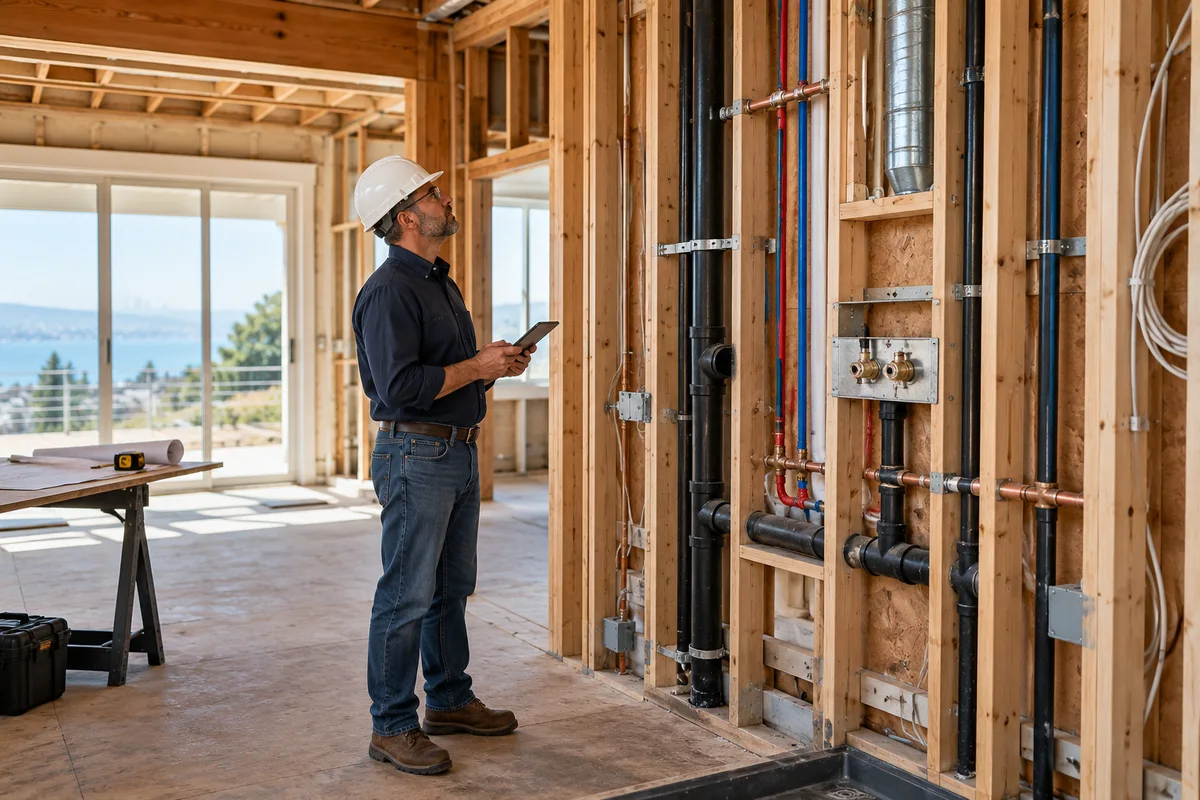
Finishing work can make a project feel close to completion while also making earlier work harder to verify. Ask the project lead to identify which work must remain visible for the required inspections. Put those checkpoints in the schedule before booking crews to close walls, install finishes or cover a foundation-related element.
The appropriate sequence depends on the approved project. Use the permit documents and authority's instructions, not a universal list copied from another remodel. San José's San José: Residential Construction Inspection Guidance is a local starting point for discussing the sequence with the contractor and inspector.
Build an inspection map
For each area, list the affected permit, work ready to inspect, responsible trade, required access and next operation that would conceal it. A bathroom wall may involve more than one trade. A single appointment should not be assumed to cover every permit or every stage. The city's San José: Inspection Records and Scheduling explains that multiple permits require separately scheduled inspections.
Ask the coordinator to reconcile the map before finishes begin. The question is not whether someone visited the site, but whether the relevant inspection result allows the planned next operation. If a result is unclear, obtain clarification rather than allowing the next crew to infer approval.
Make the appointment useful
Have the required plans, permit identification and relevant project documents available. Identify a field contact who understands the scope and can explain recent changes. Confirm safe access and that the work described in the booking is actually ready. An inspection request made to hold a date does not substitute for readiness.
For SF work, follow the applicable scheduling instructions in San Francisco: Schedule and Pay for Inspections; the method depends on the permit type and system. Do not assume an appointment window or priority service from an anecdote. Build the schedule around the booking actually obtained and have a plan if corrections prevent immediate finishing.
Respond to a correction before moving on
Record the exact correction and assign it to the responsible trade or designer. Determine whether the fix affects another inspected area or changes the approved documents. Ask how reinspection should be requested, and preserve evidence of the new result. A verbal statement that the issue is minor does not answer whether it must be resolved before concealment.
In a hypothetical ceiling upgrade, the electrician is ready but plumbing work remains incomplete. The project lead delays covering the shared area until the relevant steps are resolved. That decision may feel slower for a day, but it avoids planning finishes around an approval that has not actually occurred.
Use a release-to-finish checklist
Before a crew conceals work, check the permit and inspection identifiers, result, outstanding comments, any required reinspection and the current approved drawings. Communicate the decision to every affected trade. Keep photos as useful project records where appropriate, but do not assume they replace an inspection the authority requires.
At closeout, retain intermediate inspection history along with final evidence. Those records help explain what was reviewed if later work or a sale raises questions. The practical benefit of inspection planning is not bureaucracy for its own sake; it is keeping verification and construction in an order that avoids preventable reopening, confusion and unfinished approvals.
Make readiness observable
Ask each trade to identify what it will check before calling the work ready. That might include completion of the approved scope, availability of relevant documentation and access to the areas being inspected. The particular checks belong to the qualified project team; an owner should not use a generic checklist to perform technical verification beyond their competence.
Then identify the scheduling consequence of each possible result. If approval is obtained, the agreed next operation can proceed. If corrections are issued, name the person who communicates the hold to the finishing crew and updates the schedule. This prevents a morning inspection result from being lost before an afternoon crew arrives.
Keep the inspector's comments and the contractor's corrective action distinct in the log. The first states what the authority identified; the second explains the response. Save the subsequent result to close the loop. That simple chain is more reliable than a collection of progress photos or text messages saying everything looked fine, especially when several people coordinate the same room over different days.
When access is difficult, raise that issue during planning. Do not wait until the appointment to discover that the inspector cannot reach or observe the relevant work safely. Ask the responsible contractor how the required access will be provided.
Related questions
Can photos replace an inspection before drywall?
Only rely on an alternative if the authority explicitly accepts it for that situation. Do not assume ordinary progress photos are sufficient.
Does one passed trade inspection release every wall?
No. Confirm all relevant permits, stages and conditions before concealing shared work.
Official sources
- San José: Residential Construction Inspection Guidance
- San José: Inspection Records and Scheduling
- San Francisco: Schedule and Pay for Inspections
Why readers ask this question
These public discussions informed the topic. Individual experiences are not permit rules, verified prices or professional advice.