The short answer
Coordinate removal, storage, roofing, mounting, reinstatement, permits and operational handoff before work begins. Name a responsible party for every interface.
In this guide
Build a shared sequence
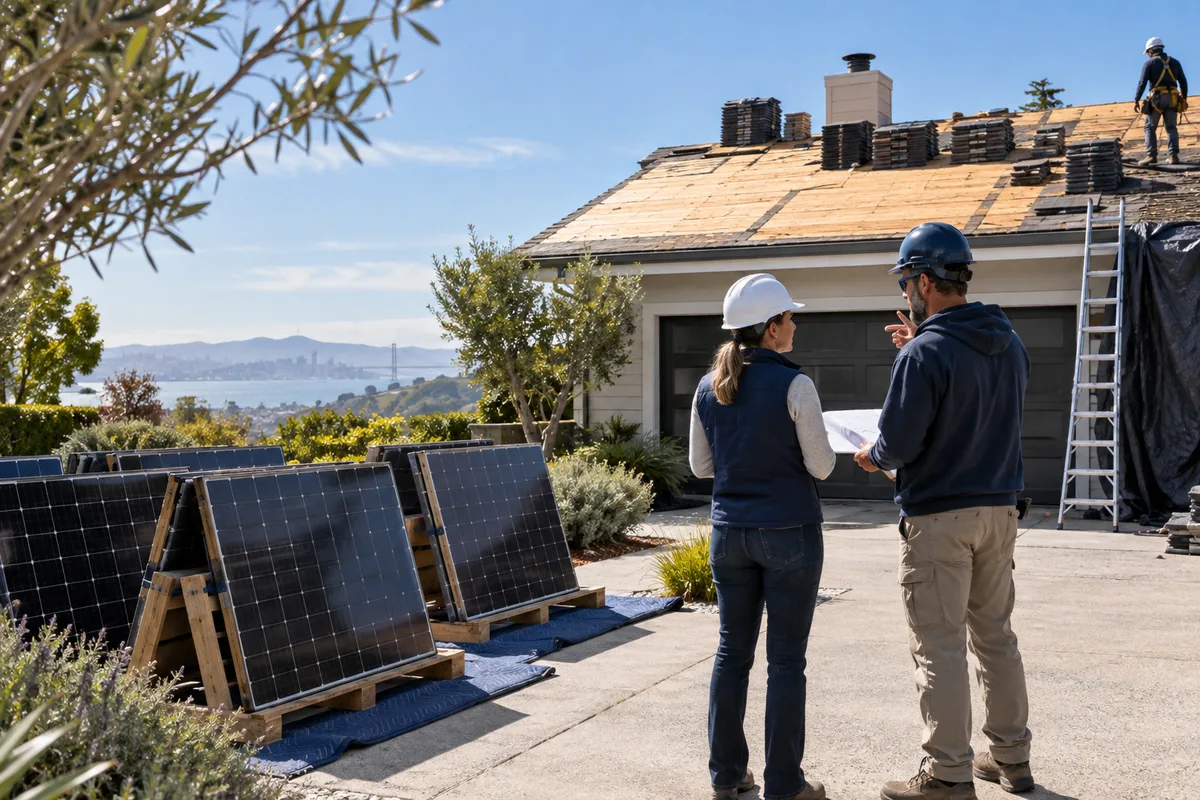
Ask the roofer and solar provider to agree on the order of work and the condition each expects at handoff. Identify who disconnects and removes equipment, who stores it, who completes roofing and who reinstalls and verifies the solar system. Do not let a scheduling gap appear only after the roof is exposed.
The providers must determine the technical work and safe electrical procedures. A homeowner’s task is to verify the coordination and contract boundaries, not direct disconnection or mounting details.
Inventory what is being handled
Request an equipment record and photographs of accessible existing conditions before work. Ask whether removal and reinstatement retain the existing equipment and layout or include proposed changes. A replacement part or layout change can affect more than the roofer’s work.
Record who is responsible for damage during removal, storage and reinstallation under the actual contracts. Ask how existing warranties are treated and obtain the relevant provider’s answer. Do not assume a roof warranty covers solar work or that a solar warranty covers every roof penetration.
Review permitting as a combined project
The San José Reroof Projects guide notes additional permits when rooftop equipment is altered or removed. San José Solar and Storage Projects provides San José’s solar-project entry point. These are local resources, not a universal Bay Area permit recipe. The project team should confirm which approvals apply to the actual removal and reinstatement scope.
Keep the reroof permit and solar-related documents together. If the equipment plan changes during construction, ask the responsible professional whether revised review is needed before proceeding.
Define the watertight handoff
Ask who approves the mounting interface with the new roof assembly and who investigates a later leak near that area. The goal is to avoid a contract gap where each provider says the other owns the issue. Request the manufacturer or installer requirements relevant to the proposed arrangement without trying to substitute a generic internet detail.
A hypothetical roofer may finish the covering correctly while the solar contract excludes a mounting change the new assembly requires. That conflict is easier to resolve before purchase and scheduling than after both crews have mobilized.
Include operational closeout
Agree on evidence that the solar work is complete: the provider’s commissioning or operational check, any required inspection record and the owner’s handoff information. Ask how the downtime is scheduled and who communicates delays.
Your interface checklist should show removal, storage, roof preparation, mounting coordination, reinstatement, permits, inspection, weather protection, leak-response responsibility and final operation. Compare complete combined cost and risk, not a reroof total that assumes someone else will quietly solve the solar portion.
Make the roof-to-solar handoff reviewable
Create an interface sheet with one row for each transition: equipment removal to roofing access, roofing completion to mounting work, mounting to reinstatement, and reinstatement to operational handoff. For every row, identify the accepting party and the evidence or site condition it needs. The professionals determine the technical requirements; the sheet makes their agreement visible.
A hypothetical owner might have separate contracts with a roofer and an existing solar provider. If the roofer assumes mounts will be removed while the solar provider assumes they remain, the disagreement affects both schedule and scope. Resolve it through a coordinated plan before work starts, not by asking the first crew on site to improvise.
Record custody of removed components and responsibility for loss or damage under the contracts. Ask whether storage space, access and protection are included. Confirm which provider addresses unavailable or damaged parts and how substitutions will be approved. A reinstallation promise should identify what happens when the original assumption cannot be met.
Keep weather protection and schedule gaps explicit. If a crew cannot return as planned, ask the coordinating contractor how the property and incomplete work will be managed. The owner should know whom to call rather than becoming the messenger between two companies that have never compared their scopes.
At the end, collect separate roof and solar completion information plus any applicable permit records. Confirm how later concerns are reported and who coordinates an investigation at the interface. You cannot guarantee that no problem will arise, but you can avoid a foreseeable responsibility gap in which neither provider has agreed to examine it.
Related questions
Can any roofer remove my solar panels?
Do not assume it is included or within the proposed team’s scope. Identify the appropriately qualified responsible provider and the permits and coordination required for the actual work.
Who responds if there is a leak after reinstatement?
The contracts should identify how responsibility is evaluated and who coordinates the response. Clarify roof, mounting and solar-work interfaces before signing.
Official sources
Why readers ask this question
These public discussions informed the topic. Individual experiences are not permit rules, verified prices or professional advice.